Table of Contents
- Why Some Dog Breeds Shed Less Than Others
- Are Low-Shedding Dogs Hypoallergenic?
- Small Dog Breeds That Don’t Shed
- Medium Dog Breeds That Don’t Shed
- Large Dog Breeds That Don’t Shed
- Dogs That Shed Less but Still Need Grooming
- Are Low-Shedding Dogs Good for Daycare and Social Play?
- Choosing the Right Low-Shedding Dog for Your Lifestyle
- Frequently Asked Questions About Non-Shedding Dogs
- Low-Shedding Dog Breeds Are A Great Choice For Families Who Want Less Hair Around The House
For many dog lovers, shedding is one of the biggest challenges of pet ownership. Dog hair on furniture, clothes, floors, and car seats can be frustrating to manage, especially for families who want a cleaner home or people who struggle with allergies. While no dog is truly 100% shed-free, some breeds shed so little that they’re often called low-shedding or non-shedding dogs.
Understanding which dog breeds don’t shed much—and why—can help you choose a dog that fits your lifestyle. These breeds still need grooming and care, but they tend to leave far less hair behind than heavy-shedding breeds.
Why Some Dog Breeds Shed Less Than Others
Shedding depends on a dog’s coat type, hair growth cycle, and genetics. Dogs with fur tend to shed more, while dogs with hair grow their coats continuously, similar to humans. Hair-type coats fall out much more slowly and usually get caught in the coat instead of landing on your couch or carpet.
Many low-shedding breeds also lack an undercoat. Dogs with thick double coats shed seasonally, while single-coat dogs usually shed very little year-round. This is why many low-shedding breeds require regular grooming—because their hair keeps growing instead of falling out naturally.
The American Kennel Club explains the difference between hair and fur in dogs here:
https://www.akc.org/expert-advice/health/do-dogs-have-hair-or-fur/
Are Low-Shedding Dogs Hypoallergenic?
Low-shedding dogs are often labeled as hypoallergenic, but this term can be misleading. Allergies are usually triggered by dander, saliva, and skin oils—not hair alone. However, dogs that shed less often release fewer allergens into the environment, which can help allergy-sensitive owners.
While no dog is completely allergy-free, many low-shedding breeds are easier for people with mild allergies to live with. Spending time around a breed before adopting is always recommended.
Small Dog Breeds That Don’t Shed
Poodle (Toy and Miniature)
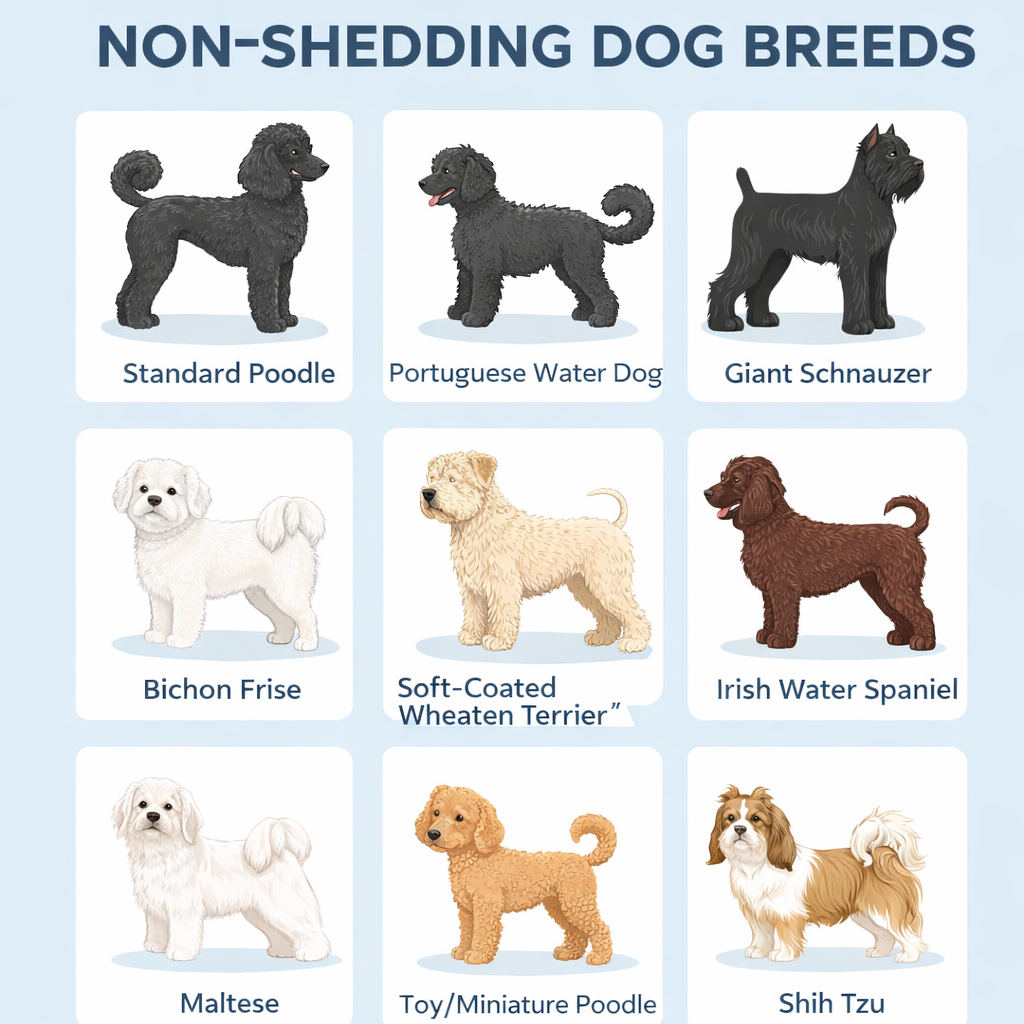
Poodles are one of the most well-known low-shedding dog breeds. Their curly, hair-like coat traps loose hair instead of shedding it around the house. Toy and Miniature Poodles are great options for smaller homes and apartments.
Poodles are also highly intelligent, playful, and easy to train. Their coat requires regular brushing and professional grooming, but shedding is minimal.
Bichon Frise
The Bichon Frise has a soft, curly coat that sheds very little. These dogs are cheerful, affectionate, and love being around people. Because their hair continues to grow, routine grooming is essential to prevent matting.
Bichons are often recommended for families who want a friendly, low-shedding companion.
Maltese
Maltese dogs have long, silky hair instead of fur. They shed very little and are known for their gentle, affectionate nature. Their coat can be kept long or trimmed short for easier maintenance.
Although they don’t shed much, daily brushing is important to keep their hair healthy and tangle-free.
Shih Tzu
Shih Tzus are another small breed with hair instead of fur. They shed very little and are popular with families and apartment dwellers. Their friendly temperament and compact size make them excellent companion dogs.
Regular grooming is needed, especially if the coat is kept long.
Medium Dog Breeds That Don’t Shed
Portuguese Water Dog
Portuguese Water Dogs have curly or wavy coats that shed very little. They are energetic, athletic, and love water activities. This breed became especially popular after being known as a low-shedding family dog.
They require consistent grooming but are a great choice for active households.
Soft-Coated Wheaten Terrier
This breed has a soft, flowing coat that sheds minimally. Soft-Coated Wheaten Terriers are friendly, playful, and energetic. Their coat grows continuously and needs frequent brushing to avoid tangles.
They’re a great option for families who want a medium-sized, low-shedding dog with lots of personality.
Lagotto Romagnolo
Lagotto Romagnolos are curly-coated dogs originally bred for truffle hunting. Their dense, woolly coat sheds very little and helps trap loose hair. They are affectionate, intelligent, and love mental stimulation.
This breed is becoming more popular among owners looking for low-shedding dogs with high intelligence.
Large Dog Breeds That Don’t Shed
Standard Poodle
Standard Poodles offer all the benefits of smaller Poodles but in a larger size. They are elegant, athletic, and extremely smart. Their curly coat sheds very little but requires regular grooming and trimming.
Standard Poodles are excellent family dogs and do well in active households.
Giant Schnauzer
Giant Schnauzers have a wiry coat that sheds minimally. They are strong, loyal, and protective dogs that thrive with training and structure. Their coat requires hand-stripping or regular grooming to maintain texture.
They are best suited for experienced dog owners.
Irish Water Spaniel
This breed has tight curls that shed very little and help repel water. Irish Water Spaniels are energetic, playful, and intelligent. Like other curly-coated breeds, they need regular grooming but produce minimal loose hair.
Dogs That Shed Less but Still Need Grooming
Low shedding does not mean low maintenance. Many non-shedding breeds require more grooming, not less. Because loose hair stays trapped in the coat, it can mat or tangle if not brushed regularly.
Professional grooming every 4 to 8 weeks is common for low-shedding breeds. Brushing at home helps keep the coat healthy and reduces skin issues.
PetMD offers a helpful guide on grooming needs for low-shedding dogs:
https://www.petmd.com/dog/general-health/low-shedding-dog-breeds
Are Low-Shedding Dogs Good for Daycare and Social Play?
Low-shedding dogs do very well in group play environments like Woof Playcare. Their coats are less likely to leave hair behind during play, and regular grooming keeps them comfortable and clean.
However, grooming and hygiene are still important. Dogs with long or curly coats should be brushed and checked regularly to prevent mats, especially after active play.
Choosing the Right Low-Shedding Dog for Your Lifestyle
While shedding is important, it should not be the only factor when choosing a dog. Energy level, size, temperament, grooming needs, and training requirements all matter.
Some low-shedding dogs are very active and need daily exercise, while others are calmer and prefer companionship. Make sure the breed’s needs match your lifestyle before adopting.
Frequently Asked Questions About Non-Shedding Dogs
Do any dogs truly not shed at all?
No. All dogs shed at least a small amount, but low-shedding breeds shed so little that it’s barely noticeable.
Are low-shedding dogs better for allergies?
They can be. Less shedding usually means fewer allergens in the home, but no dog is completely allergy-free.
Do low-shedding dogs need more grooming?
Yes. Because their hair doesn’t fall out naturally, regular brushing and grooming are necessary.
Are low-shedding dogs good with kids?
Many are. Breeds like Poodles, Bichons, and Portuguese Water Dogs are known for being family-friendly.
Do low-shedding dogs smell less?
They often do, especially with regular grooming, since less hair buildup can mean less odor retention.
Can mixed-breed dogs be low-shedding?
Yes. Some mixed breeds inherit low-shedding traits, but results can vary.
Low-Shedding Dog Breeds Are A Great Choice For Families Who Want Less Hair Around The House
Low-shedding dog breeds are a great choice for families who want less hair around the house and easier cleanup. From small companions like Maltese and Bichons to larger dogs like Standard Poodles and Portuguese Water Dogs, there are plenty of options for every lifestyle.
While these dogs shed less, they still require regular grooming, attention, and care. When matched with the right home, low-shedding dogs make loving, playful, and rewarding companions.