Dog Food Calculator
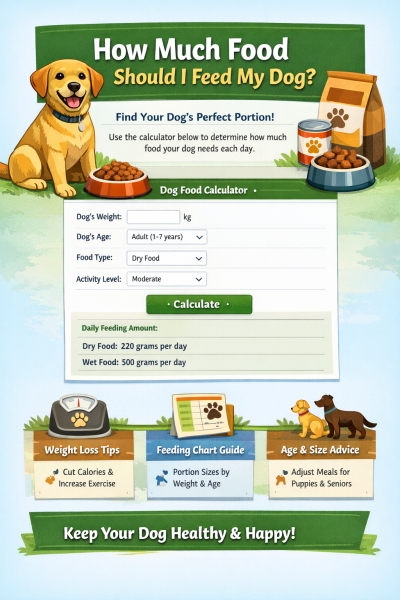
Estimate how much food to feed your dog per day using weight in kg, age, goal, food type, and calorie density.
Enter Your Dog's Details
Your Results
Enter your dog's details and click Calculate Food Amount to see daily calories and feeding amounts.
Healthy Weight-Loss Tips for Dogs
- Measure every meal instead of free-feeding.
- Keep treats to around 10% or less of total daily calories.
- Ask your vet about your dog's ideal target weight.
- Use slow, steady weight loss instead of drastic cuts.
- Increase walks and playtime as your dog safely tolerates.
*Disclaimer – This dog food calculator is provided for informational purposes only and is intended to offer general feeding estimates based on standard veterinary formulas. Results are not guaranteed and may vary depending on your dog’s breed, metabolism, body condition, health status, and activity level. Calorie needs can differ significantly between individual dogs, and factors such as medical conditions, medications, and lifestyle should be considered when determining proper feeding amounts. This tool does not replace professional veterinary advice. Always consult with a licensed veterinarian before making significant changes to your dog’s diet, especially for puppies, senior dogs, overweight pets, or dogs with underlying health conditions.
How Much Food Should I Feed My Dog?
If you’ve ever looked at your dog’s food bowl and wondered, “Am I feeding too much or not enough?” you’re not alone. One of the most common questions dog owners ask is how much food to feed their dog per day. The truth is, there is no single answer that works for every dog. Feeding the right amount depends on several important factors, including your dog’s weight, age, activity level, metabolism, and overall health.
Some dogs burn calories quickly and need more food, while others gain weight easily and need less. Feeding too much can lead to obesity, joint problems, and shorter lifespans. Feeding too little can cause low energy, poor coat condition, and nutritional deficiencies. That’s why it’s important to move beyond guessing and use a more accurate method, like a dog food calculator, to determine your dog’s daily needs.
How Much Food to Feed Your Dog Per Day
In general, most dogs should eat somewhere between 2% and 3% of their body weight per day. This is a basic guideline that gives you a starting point, but it doesn’t take into account all the variables that make your dog unique. For example, a highly active dog that runs daily will need more food than a dog that spends most of its time indoors.
A dog with low activity levels may only need around 2% of its body weight in food each day. A moderately active dog will usually fall closer to 2.5%, while highly active or working dogs may need 3% or more. While this method can give you a rough estimate, it is not as precise as calculating your dog’s calorie needs based on weight and lifestyle. That’s where a dog food calculator becomes much more useful, because it adjusts feeding recommendations based on real data instead of general averages.
How Much to Feed a Dog by Weight (kg)
Many dog owners prefer to use weight-based feeding charts because they are easy to understand. If you know your dog’s weight in kilograms, you can estimate how much food they should be eating each day. Smaller dogs require less food overall, while larger dogs need significantly more to maintain their energy levels and body condition.
For example, a 5 kg dog may only need around 1 to 1.25 cups of dry food per day, while a 20 kg dog may need closer to 2.5 to 3 cups. Larger dogs weighing 30 kg or more can require 3 to 5 cups per day depending on activity level. When feeding wet food, the portions will be larger because wet food contains more moisture and fewer calories per serving. A 10 kg dog may need 300 to 450 grams of wet food daily, while a 30 kg dog may need 700 to 900 grams.
These numbers are helpful, but they are still general estimates. Every dog processes food differently, which is why it’s important to monitor your dog’s weight and adjust portions as needed.
How Much Wet Food to Feed a Dog by Weight (kg)
Wet food is a popular option for many dog owners because it is easier to eat, more flavorful, and contains higher moisture content. However, because wet food has fewer calories per serving compared to dry kibble, dogs usually need larger portions to meet their daily energy needs.
A small dog may need one to two cans of wet food per day, while a medium-sized dog may need two to three cans. Large dogs often require three to five cans or more depending on the calorie content of the food. Not all wet foods are the same, so it’s important to check the label and understand how many calories are in each can or tray.
If you are feeding only wet food, you may notice your dog seems to eat more volume compared to dry food. This is completely normal. The key is to focus on calories, not just portion size. Using a calculator helps you convert calories into exact feeding amounts so you’re not overfeeding or underfeeding.
How Much Food to Feed Your Dog by Age
Your dog’s age plays a major role in how much food they need each day. Puppies, adults, and senior dogs all have very different nutritional requirements and growth patterns. Feeding the wrong amount at the wrong stage can impact your dog’s development and long-term health.
Puppies require the most calories relative to their size because they are growing rapidly. A puppy between 0 and 4 months old may need up to three times the calories of an adult dog of the same weight. Puppies between 4 and 12 months still need extra calories, but slightly less as their growth begins to slow. During this stage, it’s best to feed smaller meals more frequently, usually three to four times per day.
Adult dogs require a more stable feeding routine. Most adult dogs do well with one to two meals per day, depending on their activity level. The goal is to maintain a healthy weight without large fluctuations.
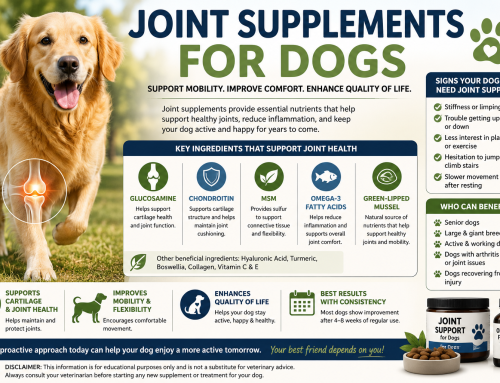
Senior dogs often need fewer calories because they tend to be less active. However, they may also need higher-quality nutrition to support joint health, digestion, and overall wellness. Adjusting portions as your dog ages is essential to keeping them healthy.
Dog Feeding Chart by Weight and Age
When you combine weight and age, you get a much more accurate picture of how much food your dog needs. For example, a 10 kg puppy will require significantly more calories than a 10 kg adult dog. At the same time, a senior dog of the same weight may require fewer calories than both.
This is why static feeding charts can only take you so far. They provide a helpful starting point, but they don’t adjust for individual differences. A dog food calculator goes a step further by factoring in multiple variables at once, giving you a more personalized feeding recommendation that fits your dog’s current stage of life.
Dog Food Calculator: How It Works
A dog food calculator uses a scientific formula to estimate your dog’s daily calorie needs. The most common formula used is called the Resting Energy Requirement, or RER. This is calculated using your dog’s weight in kilograms and represents the number of calories your dog needs at rest.
The formula looks like this: RER equals 70 multiplied by your dog’s weight raised to the power of 0.75. While that might sound complicated, the calculator does all the work for you instantly.
Once the base calorie number is calculated, it is adjusted based on your dog’s age, activity level, and whether they need to lose, maintain, or gain weight. This final number represents how many calories your dog should be eating per day. From there, the calculator converts calories into actual food portions, whether you are feeding dry food, wet food, or a mix of both.
How Much Food to Feed Your Dog (Dry vs Wet)
Choosing between dry and wet food can also impact how much you should feed your dog. Dry food, also known as kibble, is more calorie-dense, which means dogs need smaller portions. It is also easier to measure and often more convenient for daily feeding.
Wet food contains more water, which means it has fewer calories per serving. As a result, dogs need to eat larger portions of wet food to meet their daily calorie needs. Many dog owners choose to mix both types of food to get the benefits of each. Mixed feeding can improve taste, increase hydration, and provide variety in your dog’s diet.
If you are combining wet and dry food, it’s important to adjust portions so you don’t accidentally overfeed. A calculator helps you split calories correctly between both food types.
Tips for Helping Your Dog Lose Weight
If your dog is overweight, simply guessing how much to reduce their food can lead to problems. Cutting too many calories too quickly can be harmful, while not reducing enough will slow progress. A better approach is to make gradual adjustments based on your dog’s calorie needs.
Start by reducing your dog’s daily calorie intake by about 10 to 20 percent. This allows for steady, healthy weight loss without putting stress on their body. Measuring every meal is important during this process. Free-feeding or eyeballing portions often leads to overfeeding without realizing it.
Treats should also be limited. Ideally, treats should make up no more than 10 percent of your dog’s daily calorie intake. You can also replace high-calorie treats with healthier options or reduce them altogether.
Increasing your dog’s activity level can also help with weight loss. Regular walks, playtime, and interactive activities can boost calorie burn and improve overall health. If your dog has significant weight to lose, it’s always a good idea to consult your veterinarian for a safe and effective plan.
Signs You Are Feeding the Right Amount
It’s important to watch your dog’s body condition to determine if you are feeding the correct amount. A healthy dog should have a visible waist when viewed from above and a slight tuck in the abdomen when viewed from the side. You should be able to feel your dog’s ribs without pressing too hard, but they should not be clearly visible.
If your dog is gaining weight, becoming less active, or losing definition in their body shape, you may be feeding too much. On the other hand, if your dog appears too thin, has low energy, or has a dull coat, you may not be feeding enough.
Adjusting food intake based on these signs, along with using a dog food calculator, can help you maintain your dog’s ideal weight.
Why a Dog Food Calculator Is Better Than Guessing
Many dog owners rely on feeding guidelines printed on food packaging, but these guidelines are often very general. They are designed to apply to a wide range of dogs and may not reflect your dog’s specific needs.
A dog food calculator provides a more accurate and personalized approach. It considers your dog’s weight, age, activity level, and feeding goals to give you a precise recommendation. This makes it much easier to manage your dog’s weight and overall health over time.
Instead of constantly guessing or adjusting randomly, you have a clear starting point that you can fine-tune as needed.
Knowing How Much Food to Feed Your Dog
Knowing how much food to feed your dog is one of the most important parts of being a responsible pet owner. The right portion size supports healthy weight, strong muscles, good energy levels, and a longer life.
While feeding charts and general guidelines can help, they are not always precise enough for every dog. Using a dog food calculator allows you to take a more personalized approach and make smarter feeding decisions.
Start with the calculator above, monitor your dog’s condition, and make adjustments as needed. With the right balance of food, exercise, and care, you can help your dog live a happy and healthy life for years to come.