How Long Are Dogs in Heat?
If you have an unspayed female dog, one of the most important things to understand is the heat cycle. Many dog owners are surprised by the changes that occur when their dog goes into heat for the first time. From behavioral changes to physical symptoms, knowing what to expect can help you keep your dog safe and comfortable.
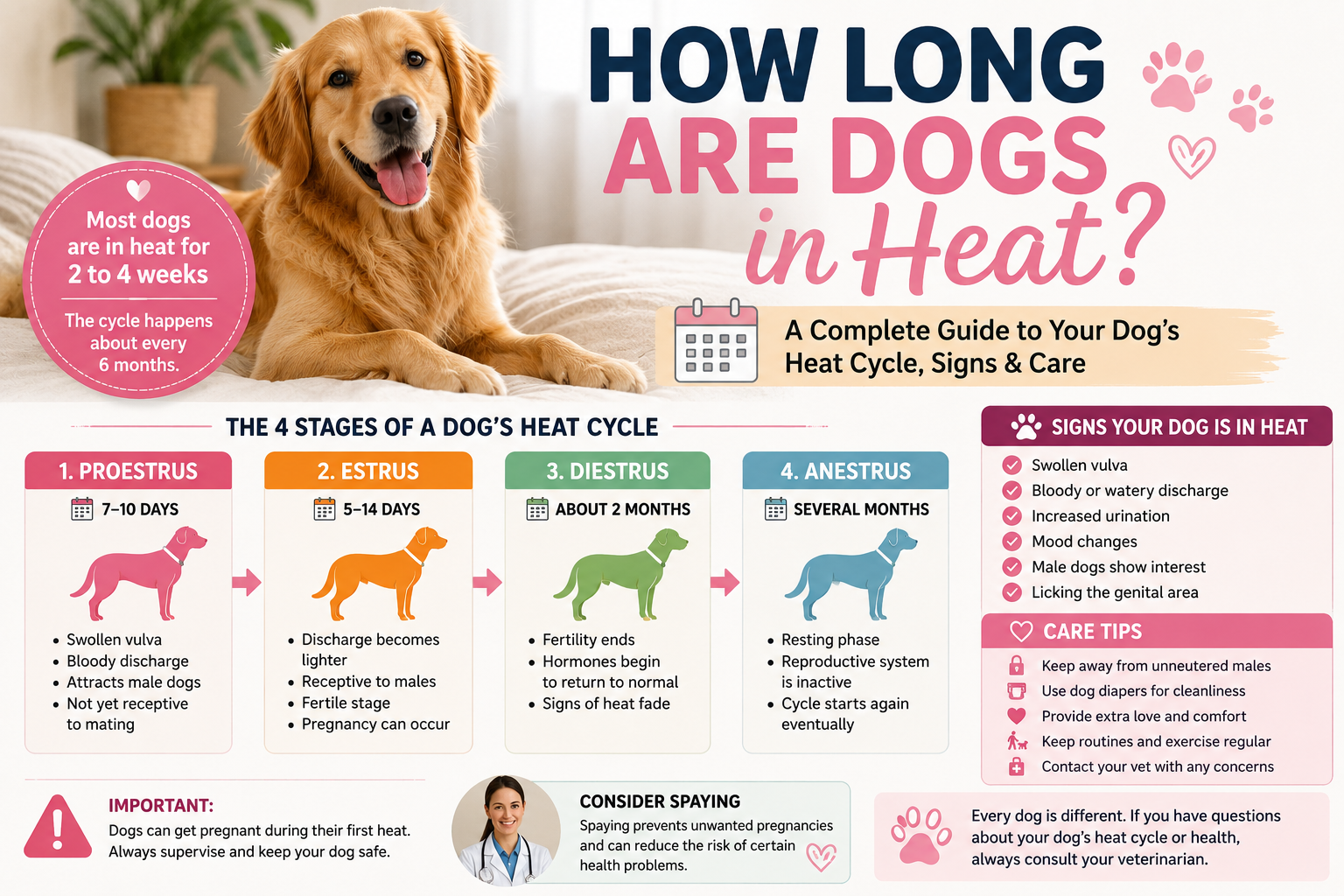
One of the most common questions pet owners ask is, how long are dogs in heat? The short answer is that most dogs stay in heat for approximately two to four weeks, although the exact length can vary depending on the dog’s breed, age, size, and individual health.
What Does It Mean When a Dog Is in Heat?
A dog in heat is a female dog that has entered her reproductive cycle and is capable of becoming pregnant. The heat cycle is similar to a menstrual cycle in humans, although there are significant differences.
During this period, hormonal changes prepare the body for breeding. Female dogs release pheromones that attract male dogs, and their bodies undergo physical and behavioral changes that signal fertility.
Most dogs experience their first heat cycle between six months and two years of age. Smaller breeds often enter heat earlier than larger breeds, which may take longer to mature.
Once a dog begins cycling, she will continue to go into heat regularly unless she is spayed.
How Long Does a Dog Stay in Heat?
The average dog heat cycle lasts between two and four weeks. Most dogs are actively in heat for approximately 18 to 21 days, although some may experience shorter or longer cycles.
The heat cycle itself consists of four separate stages, each with different symptoms and hormonal changes. While owners often refer to the entire process as being “in heat,” some stages involve fertility while others do not.
Most dogs experience visible signs of being in heat for around three weeks. During this time, you should assume your dog can become pregnant and take precautions accordingly.
The Four Stages of a Dog’s Heat Cycle
Understanding the four stages of the heat cycle helps explain why some dogs seem fertile longer than others.
Proestrus
Proestrus is the first stage of the heat cycle and typically lasts between seven and ten days.
During this phase, estrogen levels rise and physical signs begin to appear. You may notice swelling of the vulva and a bloody discharge. Male dogs often become very interested in your dog during this stage, but most female dogs are not yet receptive to mating.
Many owners first realize their dog is entering heat during proestrus because of the visible discharge and changes in behavior.
Estrus
Estrus is the fertile stage of the heat cycle and usually lasts between five and fourteen days.
This is the stage when pregnancy can occur. The discharge often becomes lighter in color and less bloody. Many female dogs become more receptive to male dogs and may actively seek them out.
Because this is the most fertile period, extra caution should be taken if you do not want your dog to become pregnant.
Even dogs that are normally obedient can behave differently during estrus, making supervision extremely important.
Diestrus
Diestrus begins after the fertile period ends and generally lasts around two months.
At this point, the dog’s body begins returning to its normal hormonal state. Male dogs are usually less interested, and the visible signs of heat gradually disappear.
Although your dog may seem back to normal, hormonal changes continue during this stage.
Anestrus
Anestrus is the resting phase between heat cycles.
This stage can last several months and is when the reproductive system is inactive. The length of anestrus varies based on breed and individual factors.
Eventually, the cycle begins again with proestrus.
How Often Do Dogs Go Into Heat?
Most dogs go into heat approximately every six months. However, there is considerable variation between breeds and individual dogs.
Small breeds often cycle more frequently, sometimes three times per year. Large and giant breeds may only go into heat once every eight to twelve months.
For example, a Chihuahua may experience heat cycles more often than a Great Dane.
As dogs age, their cycles may become less predictable, although they generally continue cycling throughout their lives if they are not spayed.
Signs Your Dog Is in Heat
Recognizing the signs of heat can help you prepare and avoid unexpected situations.
One of the first signs owners notice is swelling of the vulva. This is often accompanied by a bloody discharge that may leave spots around the home.
Behavioral changes are also common. Some dogs become more affectionate and seek additional attention. Others become restless, anxious, or clingy.
You may notice increased urination as your dog marks territory and leaves scent signals for male dogs.
Male dogs in the area may suddenly show intense interest in your yard or home. Even dogs that normally ignore your pet may become persistent during this time.
Some dogs experience changes in appetite, energy levels, or sleeping patterns as hormonal fluctuations occur.
Can Dogs Get Pregnant During Their First Heat?
Yes, dogs can become pregnant during their first heat cycle.
Although many owners assume their dog is too young to conceive, fertility begins once the reproductive system matures enough to enter heat.
Because the timing of the first heat can vary widely, it is important to supervise young female dogs carefully if they have not been spayed.
Preventing accidental breeding during the first heat is just as important as during later cycles.
How Long Should You Keep a Dog Away From Male Dogs?
If you do not want your dog to become pregnant, most veterinarians recommend keeping her separated from male dogs for the entire heat cycle.
As a general rule, maintain strict separation for at least three to four weeks from the first sign of bleeding.
Even if the visible discharge decreases, your dog may still be fertile. Male dogs can detect hormonal changes before and after obvious signs are visible.
Never assume the danger has passed simply because symptoms appear to be fading.
How to Care for a Dog in Heat
Keeping your dog comfortable during her heat cycle can make the experience easier for both of you.
Provide a quiet and comfortable place where she can rest. Some dogs experience mild discomfort or mood changes during this time and may appreciate extra attention.
Many owners choose to use dog diapers to help manage discharge and keep the home clean. These products are widely available and can make cleanup much easier.
Maintain normal exercise routines but avoid dog parks and off-leash activities where intact male dogs may be present.
Supervision is especially important outdoors. Even fenced yards may not completely prevent determined male dogs from gaining access.
Ensure your dog always has access to fresh water and continue feeding her normal diet unless advised otherwise by your veterinarian.
Should You Spay Your Dog?
Spaying eliminates heat cycles and prevents unwanted pregnancies.
Many veterinarians recommend spaying unless you plan to responsibly breed your dog. Spaying can also reduce the risk of certain health problems, including uterine infections and some reproductive cancers.
The best timing for spaying varies depending on breed, age, and health considerations. Your veterinarian can help determine the right time for your dog.
When Should You Call a Veterinarian?
While most heat cycles are normal, there are situations where veterinary attention may be necessary.
Contact your veterinarian if you notice excessive bleeding, severe lethargy, unusual discharge, signs of pain, loss of appetite, or symptoms that seem abnormal.
If your dog’s heat cycle lasts significantly longer than expected or occurs unusually often, a veterinary examination may be recommended.
Any sudden changes in behavior or health should also be evaluated to rule out underlying medical conditions.
Most Dogs Remain in Heat for Approximately Two to Four Weeks
So, how long are dogs in heat? Most dogs remain in heat for approximately two to four weeks, with the fertile portion occurring during the estrus stage. Understanding the stages of the heat cycle and recognizing the signs can help you care for your dog and prevent unwanted pregnancies.
Every dog is different, and factors such as breed, size, and age can influence how long the cycle lasts. By monitoring your dog closely and taking appropriate precautions, you can help ensure she remains safe and comfortable throughout the process.
Whether your dog is experiencing her first heat cycle or you’ve managed several before, knowing what to expect can make the experience much less stressful for everyone involved.
Disclaimer
This article is intended for informational and educational purposes only and should not be considered veterinary advice. Every dog is different, and heat cycles can vary based on breed, age, health, and individual circumstances. If you have questions about your dog’s reproductive health, unusual symptoms, breeding concerns, or whether spaying is appropriate for your pet, consult a licensed veterinarian. If your dog appears ill, experiences excessive bleeding, or shows signs of distress, seek veterinary care promptly.