How to Remove a Tick From a Dog
Finding a tick on your dog can be alarming. Whether your dog spends time hiking, playing in the backyard, or walking through tall grass, ticks can attach themselves surprisingly quickly. These small parasites feed on blood and can potentially transmit diseases to both dogs and humans, which is why removing them properly is important.
The good news is that removing a tick from a dog is usually straightforward when done correctly. Acting quickly and using the proper technique can reduce the risk of infection and help keep your dog healthy.
Why Ticks Are Dangerous for Dogs
Ticks are more than just annoying pests. They can carry bacteria, parasites, and viruses that may cause serious health problems in dogs. Depending on where you live, ticks may spread diseases such as Lyme disease, ehrlichiosis, anaplasmosis, and Rocky Mountain spotted fever.
Not every tick carries disease, and not every tick bite results in illness. However, the longer a tick remains attached, the greater the chance of disease transmission. This is one reason why prompt removal is so important.
Dogs that spend time outdoors are more likely to encounter ticks, especially in wooded areas, tall grass, brush, and fields.
How to Check Your Dog for Ticks
Before you can remove a tick, you need to find it. Ticks often attach themselves in areas where the skin is thinner and easier to access.
Common places to check include around the ears, under the collar, between the toes, under the legs, around the eyes, around the tail, and under the chin. Running your hands slowly through your dog’s coat can help you feel small bumps that may be hidden beneath the fur.
Ticks can vary in size. Some are as small as a pinhead, while others become much larger after feeding. A fully engorged tick may resemble a small gray or brown bean attached to the skin.
Regular tick checks are one of the best ways to catch problems early.
What You’ll Need to Remove a Tick
The safest way to remove a tick is with fine-tipped tweezers or a tick removal tool designed specifically for pets.
Before starting, gather a few basic supplies. Having everything ready can make the process easier and reduce stress for both you and your dog.
You may want to have:
Fine-tipped tweezers or a tick remover, disposable gloves, rubbing alcohol, a small container with a lid, antiseptic solution, and a few treats to reward your dog afterward.
Using the right tools helps ensure the entire tick is removed properly.
How to Remove a Tick From a Dog Step by Step
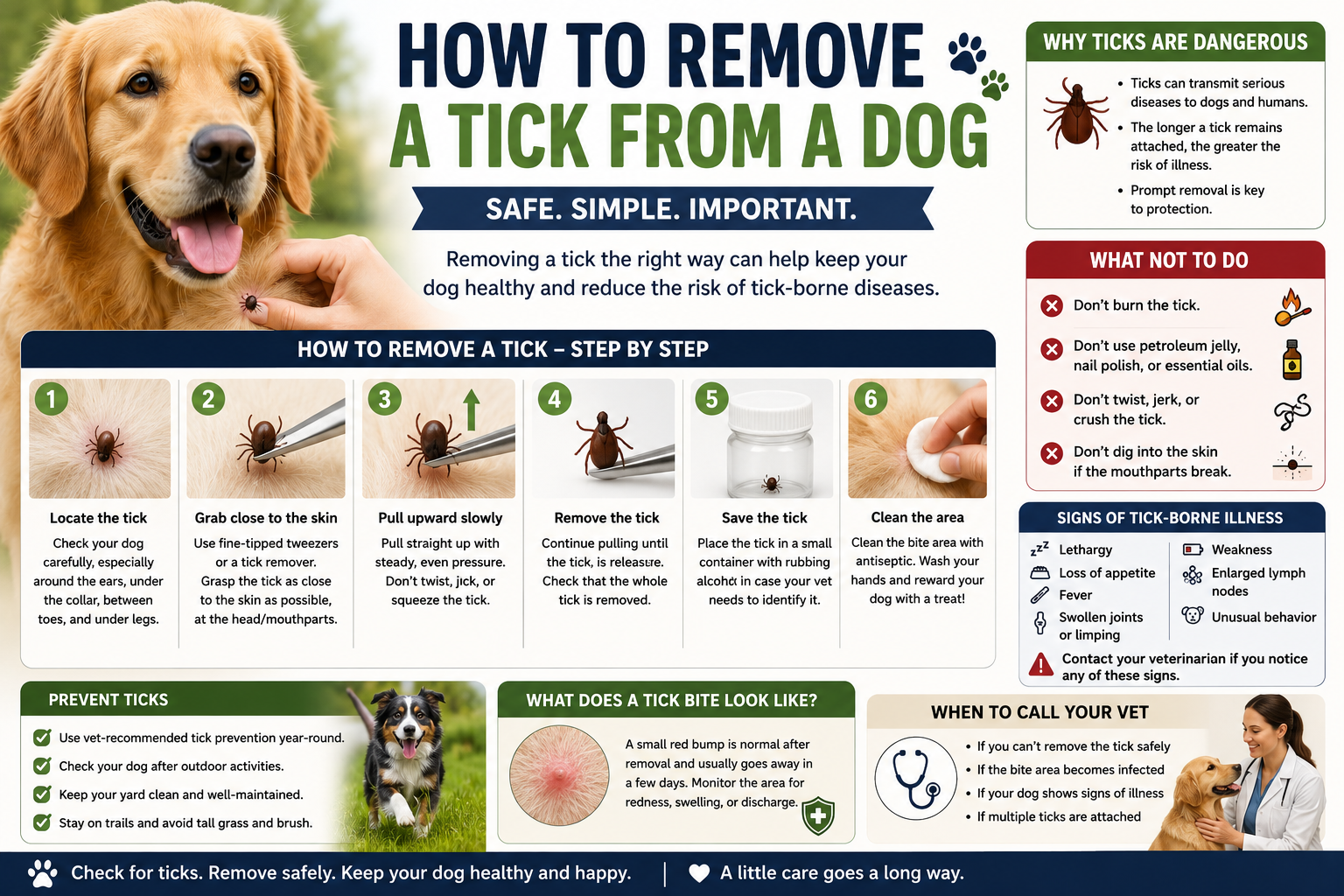
Start by keeping your dog calm and still. If possible, have someone help hold your dog while you remove the tick.
Using tweezers, grasp the tick as close to the skin as possible. Try to grab the tick by its head or mouthparts rather than its swollen body.
Once you have a firm grip, pull upward slowly and steadily. Avoid twisting, jerking, or crushing the tick. The goal is to remove the entire tick intact.
Continue pulling until the tick releases its grip on the skin. Once removed, place the tick into a sealed container with rubbing alcohol.
Afterward, clean the bite area with an antiseptic and wash your hands thoroughly.
If your dog tolerates it, give plenty of praise and a treat to create a positive experience.
What Not to Do When Removing a Tick
There are several outdated tick removal methods that should be avoided.
Do not burn the tick with a match or lighter. Do not apply petroleum jelly, nail polish, soap, or essential oils in an attempt to suffocate it. These methods can irritate the tick and potentially increase the risk of disease transmission.
Avoid squeezing the tick’s body while removing it. Crushing the tick can force fluids back into the bite site.
The safest and most effective method remains simple mechanical removal with tweezers or a proper tick removal tool.
What If Part of the Tick Stays Behind?
Sometimes a tick’s mouthparts can remain embedded in the skin after removal. This can happen even when you are careful.
If a small portion remains, do not aggressively dig into your dog’s skin. In many cases, the body will naturally push the remaining material out as the area heals.
Keep the area clean and monitor it for redness, swelling, or signs of infection.
If you are concerned or the area becomes increasingly irritated, contact your veterinarian for guidance.
What Does a Tick Bite Look Like on a Dog?
After removing a tick, you may notice a small red bump where it was attached. This is usually normal and often resolves within a few days.
Some dogs may develop mild irritation or swelling around the bite area. As long as the area continues improving, this is generally not a cause for concern.
However, excessive redness, discharge, pain, or worsening swelling should be evaluated by a veterinarian.
Monitoring the bite site for several days can help you identify any potential problems early.
Signs of Tick-Borne Illness in Dogs
Most dogs recover from tick bites without any complications. However, because ticks can transmit diseases, it is important to watch for symptoms in the weeks following a bite.
Signs of a tick-borne illness may include lethargy, loss of appetite, fever, swollen joints, limping, weakness, enlarged lymph nodes, or unusual behavior.
Some diseases can take days or even weeks to produce noticeable symptoms.
If your dog develops any unusual symptoms after a tick bite, contact your veterinarian promptly.
Early diagnosis and treatment often lead to better outcomes.
How to Prevent Ticks on Dogs
Prevention is one of the most effective ways to protect your dog from ticks.
Many veterinarians recommend year-round tick prevention products. These may include topical treatments, chewable medications, tick collars, or other preventive options.
Regular grooming can also help you spot ticks before they have a chance to attach for long periods.
Keeping your yard maintained by trimming grass and removing brush can reduce tick populations around your home.
After hikes, walks, or outdoor adventures, perform a thorough tick check before your dog comes inside.
Are Tick Prevention Products Worth It?
For many dogs, tick prevention products provide valuable protection.
Ticks are active in many parts of the country throughout much of the year. Even dogs that spend limited time outdoors can be exposed.
Preventive products not only reduce the risk of tick attachment but may also help lower the chances of tick-borne disease transmission.
Your veterinarian can help determine which prevention method is best based on your dog’s lifestyle and location.
When Should You Call a Veterinarian?
While many tick bites can be managed at home, there are situations where veterinary care is recommended.
You should contact your veterinarian if you cannot safely remove the tick, if the bite area becomes infected, if your dog develops signs of illness, or if you notice multiple ticks attached at the same time.
Puppies, senior dogs, and dogs with underlying health conditions may also benefit from professional evaluation after a tick bite.
When in doubt, it’s always better to ask your veterinarian.
The Key is to Stay Calm and Use Proper Tools
Knowing how to remove a tick from a dog is an important skill for every pet owner. Quick and proper removal can help reduce the risk of infection and disease while keeping your dog comfortable.
The key is to stay calm, use the proper tools, remove the tick carefully, and monitor your dog afterward. Regular tick checks and preventive care can go a long way toward protecting your pet from future problems.
With a little preparation and awareness, you can safely handle tick encounters and keep your dog healthy throughout the year.
Disclaimer
This article is intended for informational and educational purposes only and should not be considered veterinary advice. Tick bites and tick-borne illnesses can vary in severity depending on the species of tick, geographic location, and individual dog. Always consult a licensed veterinarian if you have concerns about a tick bite, signs of infection, or your dog’s overall health. If your dog develops symptoms such as lethargy, fever, limping, or loss of appetite after a tick bite, seek veterinary care promptly.