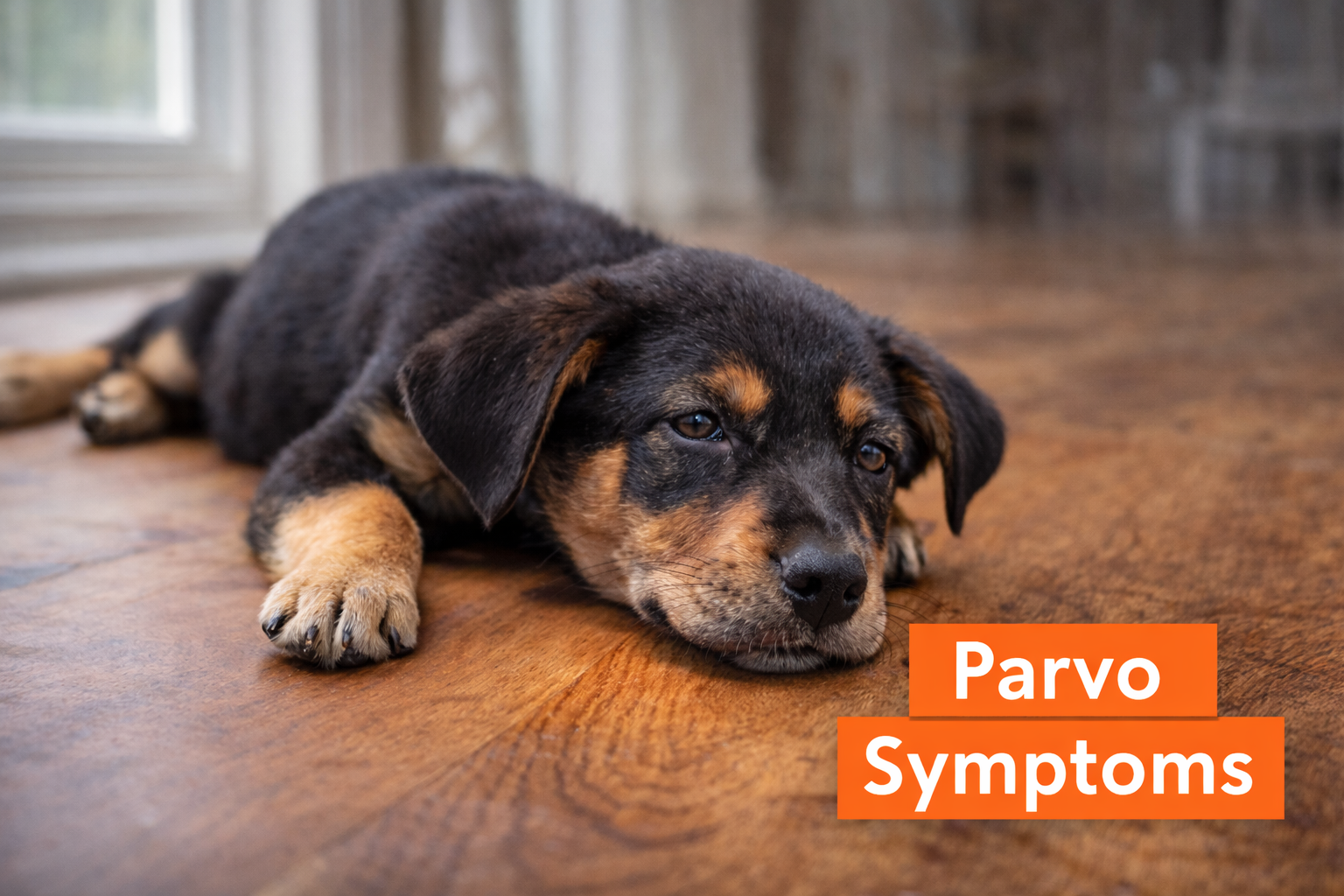
Parvo, short for Canine Parvovirus, is one of the most serious and contagious illnesses that can affect dogs—especially puppies. It spreads quickly, hits hard, and can become life-threatening if not treated early.
For dog owners, recognizing the symptoms of parvo as soon as possible can make the difference between recovery and a much more serious outcome. The earlier you act, the better your dog’s chances.
Let’s break down exactly what parvo is, the most common symptoms to watch for, and what you should do if you think your dog may have it.
What Is Parvo?
Parvo is a highly contagious virus that attacks a dog’s gastrointestinal system. In severe cases, it can also affect the heart muscles, especially in very young puppies.
The virus spreads through contact with infected dogs, contaminated surfaces, or even something as simple as stepping on infected ground and bringing it into your home.
Places like dog parks, sidewalks, and even pet care facilities can carry the virus if proper sanitation isn’t followed.
Puppies under six months old are at the highest risk, especially if they are not fully vaccinated.
Why Parvo Is So Dangerous
Parvo doesn’t just make dogs feel sick—it attacks their ability to absorb nutrients and stay hydrated. It damages the lining of the intestines, leading to severe vomiting and diarrhea.
Because of this, dogs with parvo can become dangerously dehydrated very quickly. Their immune system is also weakened, making it harder for their body to fight off the infection.
Without treatment, parvo can become fatal in a matter of days.
Early Parvo Symptoms to Watch For
The first signs of parvo can be easy to miss if you’re not paying close attention. Many of these symptoms may seem mild at first, but they can escalate quickly.
Lethargy and Low Energy
One of the earliest signs is a sudden drop in energy. If your normally playful puppy becomes tired, withdrawn, or uninterested in activity, it could be a warning sign.
Dogs with parvo often appear weak and may spend most of their time lying down.
Loss of Appetite
A dog with parvo will often stop eating. Even treats or favorite foods won’t interest them.
This loss of appetite contributes to weakness and makes it harder for their body to recover.
Fever
Some dogs develop a fever in the early stages of parvo, while others may actually have a lower-than-normal body temperature as the illness progresses.
Severe Parvo Symptoms
As the virus progresses, the symptoms become much more serious and harder to ignore.
Vomiting
Frequent and severe vomiting is one of the most common symptoms of parvo. This can happen multiple times a day and quickly leads to dehydration.
Diarrhea (Often Bloody)
Parvo is known for causing severe diarrhea, which is often foul-smelling and may contain blood.
This is one of the most recognizable signs of the virus and usually indicates that the infection has progressed.
Dehydration
Because of constant vomiting and diarrhea, dogs lose fluids rapidly.
Signs of dehydration include:
- Dry gums
- Sunken eyes
- Weakness
- Skin that doesn’t bounce back when gently pulled
Abdominal Pain
Dogs with parvo often experience stomach pain. You may notice them whining, refusing to move, or reacting when their abdomen is touched.
How Fast Do Parvo Symptoms Appear?
Parvo symptoms typically appear within 3 to 7 days after exposure.
What makes this virus especially dangerous is how quickly it progresses. A dog can go from mild symptoms to severe illness in a very short period of time.
This is why early detection and fast action are so important.
When Should You Call a Vet?
If you notice any combination of the symptoms listed above, especially vomiting and diarrhea together, you should contact a veterinarian immediately.
Parvo is not something you can treat at home. Dogs need professional care, which often includes:
- IV fluids to prevent dehydration
- Medications to control vomiting
- Antibiotics to prevent secondary infections
- Close monitoring
The sooner treatment begins, the better the chances of recovery.
Can Adult Dogs Get Parvo?
While puppies are the most vulnerable, adult dogs can still get parvo—especially if they are unvaccinated or have weakened immune systems.
Vaccinated adult dogs have a much lower risk, but it’s still important to be aware of the symptoms.
How to Prevent Parvo
Prevention is the best way to protect your dog from parvo.
Vaccination Is Key
The most effective way to prevent parvo is through proper vaccination. Puppies should receive a series of vaccines starting at a young age, followed by booster shots.
Avoid High-Risk Areas
Until your puppy is fully vaccinated, avoid places where other dogs frequent, such as dog parks or public walking areas.
Practice Good Hygiene
Parvo can survive on surfaces for long periods. Cleaning and disinfecting areas where dogs spend time can help reduce the risk.
Why Pet Care Facilities Take Parvo Seriously
At places like dog daycare or boarding facilities, preventing the spread of illnesses like parvo is a top priority.
Proper cleaning protocols, vaccination requirements, and careful monitoring of dogs help keep everyone safe.
At Woof Playcare, the focus is on creating a safe and healthy environment where dogs can play, socialize, and thrive—without unnecessary risk.
Parvo is a Serious and Fast-Moving Illness
Parvo is a serious and fast-moving illness, but knowing the symptoms can help you act quickly and protect your dog.
If your dog is showing signs like lethargy, vomiting, diarrhea, or loss of appetite, don’t wait. Getting professional help right away can make all the difference.
Staying informed, keeping your dog vaccinated, and choosing safe environments for play and care are the best ways to keep your dog happy, healthy, and protected.
Disclaimer:
This content is for informational purposes only and is not intended to replace professional veterinary advice, diagnosis, or treatment. If your dog is showing symptoms of illness, including signs of parvo, contact a licensed veterinarian immediately. Early treatment is critical and can save your dog’s life.