How to Put on a Dog Harness
A dog harness can make walks safer, more comfortable, and easier to control compared to a traditional collar. Many dog owners switch to a harness because it reduces pressure on the neck and gives better control during walks, training sessions, and outdoor adventures.
However, if you’ve ever opened a new harness and stared at the straps wondering where everything goes, you’re not alone. Many harnesses can look confusing at first, especially styles with multiple buckles and adjustment points.
The good news is that once you understand the basic design, putting on a dog harness becomes quick and easy. Whether you have a puppy learning to walk on a leash or an adult dog that pulls during walks, knowing how to properly fit a harness can make a big difference in your dog’s comfort and safety.
Why Use a Dog Harness Instead of a Collar?
While collars work well for identification tags, harnesses often provide better control during walks. Unlike a collar that places pressure directly on the neck, a harness distributes force across the chest and shoulders.
This can be especially helpful for dogs that pull on the leash, small breeds with delicate necks, brachycephalic breeds such as Bulldogs and Pugs, and puppies that are still learning leash manners.
Many veterinarians and trainers recommend harnesses because they reduce strain on the throat and help prevent neck injuries caused by sudden pulling.
Harnesses can also provide owners with more control when walking large or energetic dogs.
Understanding the Different Types of Dog Harnesses
Before putting on a harness, it’s helpful to understand which type you have. Most dog harnesses fall into three common categories.
Step-In Harnesses
Step-in harnesses are one of the easiest styles to use. They are placed on the ground and your dog steps into the leg openings before the harness is secured around the body.
These are popular for small and medium-sized dogs because they are simple and quick to put on.
Over-the-Head Harnesses
Over-the-head harnesses slide over your dog’s head before being secured around the chest.
This is one of the most common harness styles available and is often used for everyday walking and training.
Front-Clip Harnesses
Front-clip harnesses typically have a leash attachment point on the chest. These are often used for dogs that pull because they can help redirect the dog’s movement during walks.
Many front-clip harnesses also include a back attachment point for added versatility.
How to Put on an Over-the-Head Dog Harness
The majority of harnesses sold today use an over-the-head design.
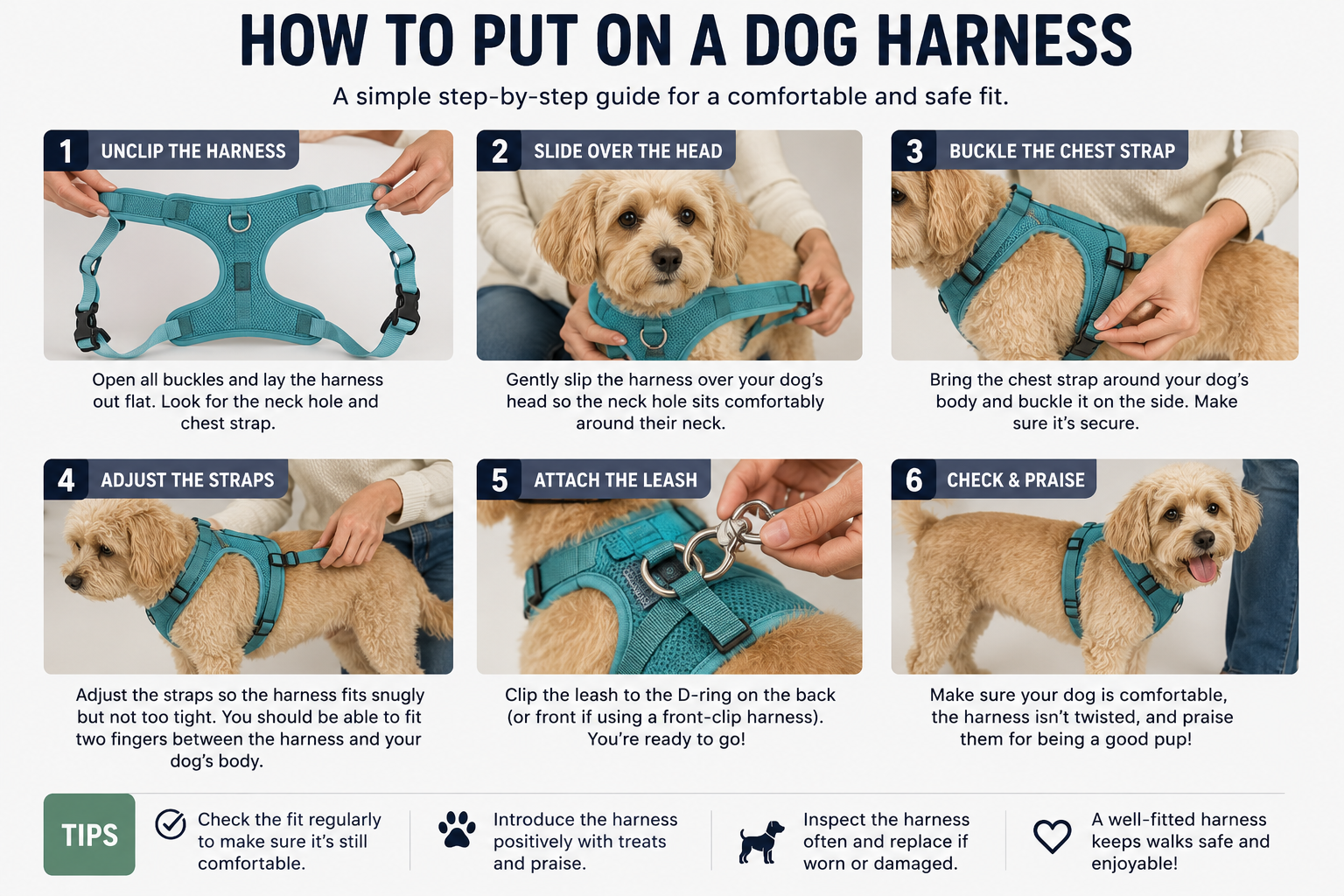
Start by identifying the neck opening. Most harnesses have a larger opening for the head and smaller straps that wrap around the chest and ribcage.
Hold the harness so the leash attachment ring is facing upward. Gently slide the neck opening over your dog’s head.
Next, bring the chest strap underneath your dog’s body. Secure the buckle on the side of the harness.
Once buckled, adjust the straps until the harness fits comfortably. You should be able to slide two fingers between the harness and your dog’s body without difficulty.
Check that the harness sits flat against the chest and does not twist or rub.
How to Put on a Step-In Dog Harness
Step-in harnesses work a little differently.
Lay the harness flat on the floor and identify the two leg openings. Guide your dog’s front paws into the correct openings.
Once both paws are positioned, pull the harness up around the chest and shoulders. Bring the straps together over the back and secure the buckle.
Attach the leash to the designated attachment ring and check the fit before heading outside.
Many owners find step-in harnesses especially useful for smaller dogs that don’t like harnesses being pulled over their heads.
How Tight Should a Dog Harness Be?
One of the most common mistakes dog owners make is choosing a harness that is either too tight or too loose.
A harness that is too tight can restrict movement and cause discomfort. A harness that is too loose can allow your dog to back out and escape.
A simple rule is the “two-finger test.” You should be able to comfortably fit two fingers between the harness and your dog’s body.
The harness should stay secure without shifting excessively when your dog walks or moves around.
Pay close attention to areas around the shoulders, chest, and under the front legs. These areas are most likely to experience rubbing if the fit is incorrect.
Signs Your Dog’s Harness Doesn’t Fit Properly
An improperly fitted harness can make walks uncomfortable and even create safety concerns.
If you notice redness, hair loss, rubbing, or skin irritation, the harness may be too tight or positioned incorrectly.
A dog that constantly scratches at the harness or seems reluctant to walk may also be uncomfortable.
If the harness shifts significantly, rotates around the body, or allows your dog to slip free, it is likely too loose.
Taking a few extra minutes to adjust the fit can prevent many common problems.
Helping Your Dog Get Used to a Harness
Some dogs accept a harness immediately, while others need a little time to adjust.
Start by allowing your dog to sniff and investigate the harness. Reward calm behavior with praise and treats.
Practice putting the harness on indoors before using it during a walk. Keep early sessions short and positive.
Many dogs quickly learn to associate the harness with fun activities like walks, playtime, and outdoor adventures.
Using treats and encouragement can help create a positive experience.
Common Harness Mistakes to Avoid
Many harness-related problems come from simple mistakes.
One common mistake is purchasing a harness based solely on breed rather than measurements. Dogs of the same breed can vary significantly in size and shape.
Another mistake is failing to adjust the straps after purchase. Most harnesses require some adjustment to achieve the correct fit.
Owners should also inspect harnesses regularly for signs of wear. Frayed straps, damaged buckles, or weakened stitching can create safety risks.
Finally, always double-check that buckles are fully secured before starting a walk.
Choosing the Right Harness for Your Dog
The best harness depends on your dog’s size, activity level, and walking habits.
For everyday walks, many owners prefer padded harnesses that provide comfort and durability. Popular options include the Ruffwear Front Range Harness, the Kurgo Tru-Fit Smart Harness, and the PetSafe Easy Walk Harness.
These harnesses are widely used by dog owners and trainers because they offer adjustable fits and reliable construction.
When selecting a harness, focus on proper fit, comfort, and durability rather than appearance alone.
When Should You Replace a Dog Harness?
Even high-quality harnesses eventually wear out.
If you notice damaged buckles, fraying straps, stretched material, broken stitching, or excessive wear, it may be time for a replacement.
Growing puppies often outgrow harnesses quickly and may need new sizes several times during their first year.
Checking your dog’s harness regularly helps ensure it remains safe and comfortable.
Putting on a Dog Harness
Learning how to put on a dog harness properly is one of the easiest ways to improve your dog’s walking experience. A correctly fitted harness provides better control, increased comfort, and greater safety during daily walks.
Whether you use a step-in harness, over-the-head harness, or front-clip training harness, taking the time to fit it correctly can help prevent discomfort and reduce the risk of escapes.
With a little practice, putting on your dog’s harness will become part of your daily routine, making every walk more enjoyable for both you and your dog.
Disclaimer
This article is intended for informational and educational purposes only and should not be considered veterinary or professional training advice. Every dog is different, and harness fit can vary depending on breed, body shape, size, and behavior. Always follow the manufacturer’s instructions for proper fitting and use. If your dog experiences discomfort, skin irritation, breathing difficulties, or mobility issues while wearing a harness, consult your veterinarian or a qualified dog trainer for guidance.